Korean American Books

Summaries and reviews of fiction and nonfiction books by Korean American authors,
books about Korean Americans and Korea, and Korean literature in English translation,
including some academic works and a sampling on the Korean War
Showing posts with label nonfiction. Show all posts

Wednesday, April 25, 2018

Project Eagle: The American Christians of North Korea in World War II, by Robert S. Kim


Tells a little-known story of a WWII initiative, Project Eagle, that, had it come to fruition and its expertise been taken advantage of, may have changed the course of Korean modern history. It covers an important and lead-up history of missionaries in Korea, both North and South, and their critical role in American early relationships in Korea, specifically the Weems and McCune families, whose influence was bedrock in the development of Korean Christian culture. This is followed by a detailed and riveting historical narrative about the Korean provisional government, especially Kim Ku, and its relationship with the OSS in planning an invasion of Japanese-occupied Korea, a plan aborted when the bombs were dropped.

Korea in War , Revolution and Peace: The Recollections of Horace G. Underwood

A personal memoir by the son of pioneering missionary Horace H. Underwood, this missive characterizes its narrator as a man of peace, involvement, equanimity, religiosity, service, and honesty. As he was president and on the board of Yonsei University for many decades, large swaths of the memoir cover this history. His preference is for missionary work to be demonstrated through service rather than straight-on evangelism, and the work of this family exemplifies that. It's an on-the-ground view of missionaries in Korea during the last days of the Japanese occupation period, WWII and the Korean War, and is a tender memoir of family and commitment to Korea by a "Korea Kid."

Saturday, June 10, 2017

Tell Me Everything You Don't Remember: The Stroke that Changed My Life, by Christine Hyung-Oak Lee


Enhancing an already enthralling beginning about the surprising facts of a young woman’s stroke at age 33, the writing in this book is what continues to beguile and capture, elevating the work to a mesmerizing memoir of a condition and a long recovery that changed her life, and the lives of many others as well. The author’s sense of detail and her reference to her journals of those days, combined with impressive research that only adds to the narrative, makes the memoir a sensitive portrayal of the condition of stroke and its result of making the brain and its memories a jumble. She writes of her experience not merely as a metaphor for her own psychological condition where the stroke made a dividing line of before and after, but also as a journey of exploration and compassionate understanding of the fraught emotional delicacies contained in that before and after, specifically the loss of her marriage, integrating her childhood history of violence, a core change in personality, of becoming a mother, discovering her body in health, and finding love anew. The book is organized like memory—fragments of scenes that appear and reappear, information and deep reflection salient to those fragments, and overall a sense of artfulness in the manipulation of time as an apt way to organize a story that threw the narrator herself out of linear time. It is an honest, heartfelt and brave book, an absorbing read not just about the condition of stroke, but about identity and finding self-love.

Friday, February 24, 2017

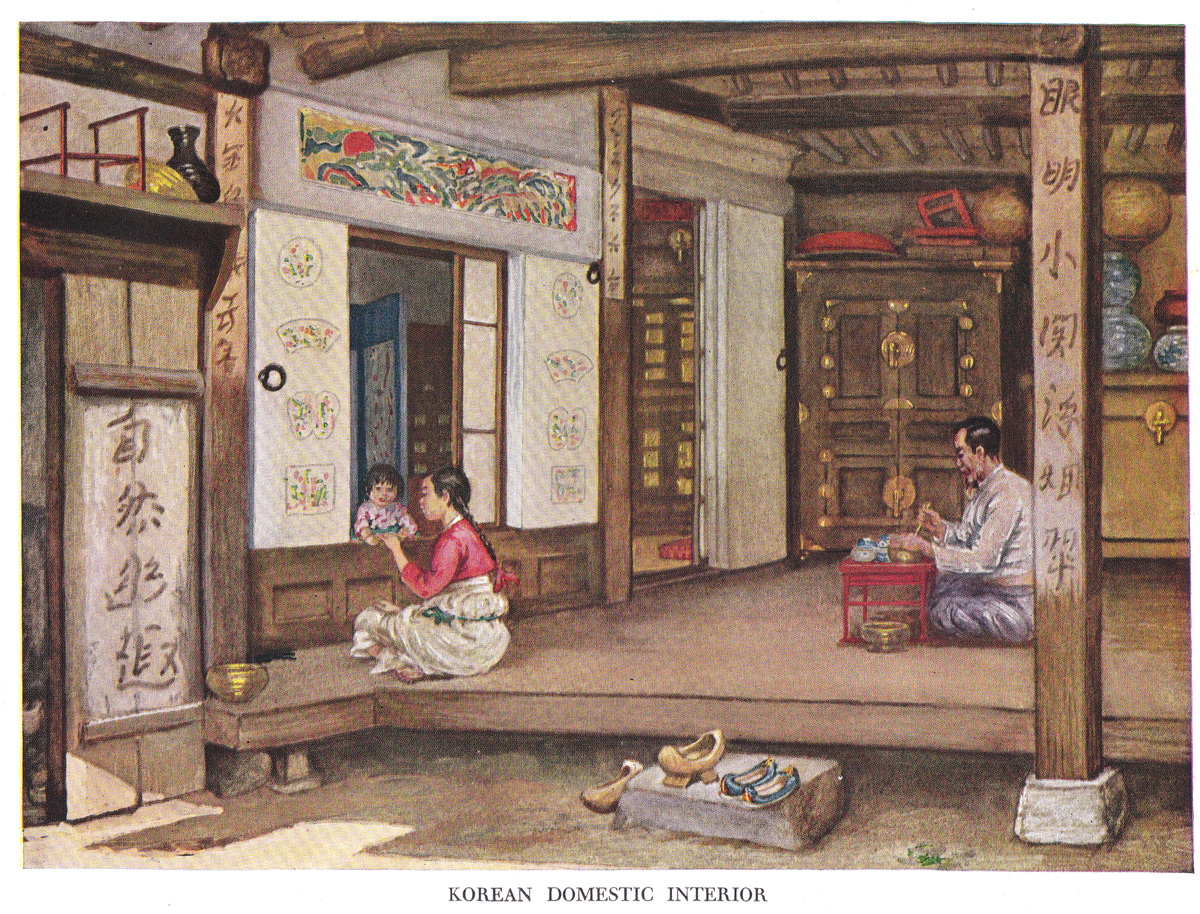
Old Korea: The Land of Morning Calm, by Elizabeth Keith and E.K. Robertson Scott


A 1946 tourism or culture info book for Korea, written and illustrated during the Colonial Period, gives the traditional look (by Westerners) at Korea's culture and customs. Color illustrations are vivid and traditional. You can sense the wonder of these two Westerners about the "orient," which infuses both the reportage and commentary, as well as the quality of the artwork and the subjects selected for illustration. Still, it's an interesting period look, though one that is glossed with sentimentality and charm. Sampling of illustrations below.


Wednesday, February 22, 2017

Without You, There Is No Us: My Time with the Sons of North Korea's Elite, by Suki Kim


Suki Kim went undercover as a Christian missionary among Christian missionaries who went undercover to North Korea under the guise of educators to young men of that nation's privileged elite. Admittedly an atheist, her double subterfuge is compounded by the oppressive regime under which she became a professor of ESL. I devoured this book in one morning both for its stellar writing and for a story that grips from the get-go and doesn't let go. The rarity of her experience, and the slow burn of its impact on her character and her life are intimately portrayed, and her love for the youth she instructed shines through with to augment the conviction of her purpose in going there. It is a book of rare courage, in which betrayal is necessarily a part of its existence, but one that feels justified by the exposure of the complexity of what it must be like for even the cream of the crop to live in this cloistered land.

Tuesday, April 22, 2014

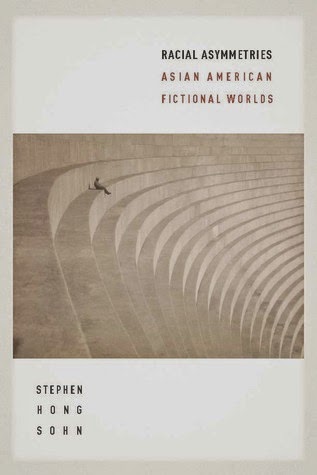
Racial Asymmetries: Asian American Fictional Worlds, by Stephen Sohn

Literature Review from ENTROPY, by Peter Tieryas Liu. Stephen Hong Sohn has written one of the smartest, analytical books on literature in the past year with Racial Asymmetries: Asian American Fictional Worlds. Sohn isn’t just a scholar, but an excavator, an archaeologist, an explorer, and a poet, traversing racial narratives to challenge “the tidy links between authorial ancestry and fictional content, and between identity and form, to expand what is typically thought of as Asian American culture and criticism.”

Thursday, October 24, 2013

Turn to the East, by Caroline Singer and
C. Le Roy Baldridge


As a piece of "living history," this fascinating large-format volume brings together the narrative of Caroline Singer and artwork of her husband, Roy Baldridge, of their year (likely 1924-25) in the Far East, including Japan, Korea and China. What makes this work fascinating is the sensitivity of these Westerners about what they experience and how it compares to other Western and political prejudices. From the Foreword: "So here…rendered in two different media, brought together because they are complementary, the imprint of the East on two different personalities. 

"It is no easy task, this rendering. Only the dull rush heedlessly into print with 'impressions of the Orient." To those with more sensitive perceptions, the East is too overwhelming for easy articulateness. It intimidates. The first few hours in Peking not only confuse, they frighten. Color is too vivid, motion in too unfamiliar a rhythm, mass too imposing, the content of the life about one too alien for translation into term intelligible to the Western mind. Another barrier also intervenes: the prejudices of foreign residents. To escape the influence of either their over-enthusiasm or maladjustment is difficult for one thrown suddenly into an alien culture."


But the two manage, despite all that. She overcomes her culture to strip and change in front of a crowd of welcoming swimmers (men and women) to Japanese men's underwear (the only garments that would fit her), enjoying the swim, only to realize the white garments are transparent in the water. But by then, she recognizes that no one cares, and so she lets it go and enjoys the company and the swim, to the horror of her husband. His illustrations are without prejudice, sensitive to the reality he portrays and skilled in his artistry to show it as real.

For Korea, they take note of the modernization that Japan brought with colonization, but also note that it was unwelcome, and she tells one particular story that exemplifies the effect of such change—hard white highways built by the Japanese, excellent railways, and in particular one steel bridge:

"Last night from the steel bridge a Korean girl threw herself into the river. Her body was found by fishermen at dawn.

"Not much over sixteen, she had been wed to a youth of her own age, wed in the traditional manner by arrangement between families. Such a marriage being almost inviolable, a divorce would be the affair not of individuals, but of clans. From the first, the girl was gentle, knowing a wife's duty. But the young man was of a newer mold, a rebel against tradition, against old-fashioned authority. He wished to choose a wife for himself. [He went] to the local authorities, the new rulers whose power is naturally greater than that of a subject's father…[and appealed] in the name of the law as new as the bridge, and as alien. What he demanded was granted—a modern divorce.

"She who had been a bride was now neither a wife nor yet a maid free to reenter her father's house, eligible again for marriage. No respected Korean family would accept her as daughter-in-law. Scorned publicly by her husband, she was disgraced, and her shame became the shame of her bewildered relatives. In her father's house she was, as in her husband's, unwelcome.

"Wearing fresh white linens from her bridal chest, she ran, last night, to meet death. Through stinking streets, past barred gates of unfriendly houses, past barred gates of the mission's gardens, she ran, a whimpering thing in white, while we lay between decent sheets, dreaming. This is the story I got this morning from the missionary's wife, whose cook had it from the gatekeeper, he having listened to the group of peddlers.

"Today I will not go down to the river."


Wednesday, September 18, 2013

The Korean Americans, by Brian Lehrer (The Immigrant Experience series)

A middle-grade book that appears to be part of a series on the immigrant experience. What strikes me foremost is that it was published in 1988, four years before Sa-i-gu, the Los Angeles race riots, which was a benchmark for change in Korean American and American relations. And so, in that light, it's interesting to see how this book both attempts to delineate the particularities of the Korean American experience while simultaneously reinforcing burgeoning stereotypes of the KA culture. The photographs and brief modern Korean history up until the repeal of the Oriental Exclusion Act are interesting. A good “history in it’s time” brief reading.

Sunday, August 21, 2011

KYOPO by Cindy Hwang (CYJO)

The Kyopo project by artist Cindy Hwang is a five-year photography and textual endeavor that explores and exposes the breadth and individual depth of people “of Korean ethnic descent and living outside of Korea,” from which the acronym derives. Several of CYJO’s KYOPO photographs are on exhibition as part of the Smithsonian National Portrait Gallery’s “Asian American Portraits of Encounter,” October 12–October 14, 2011. The photographs line the main hallway of the exhibition, while about eight side galleries feature other Asian American portraiture works, all of them equally stirring and evocative.

This massive book delves deeper than the exhibition can, presenting more than 200 individual photographic portraits, all in a similar pose, in the exact same setting with same lighting, and, most strikingly, of a similar scale. While these elements serve to give a surface uniformity to the book, what rises is the distinct individualism of the members of this grouping, both visually and with textual information. Photographs are displayed on the left while on the right are text blocks of their name, occupation, where they were born and where they live, and a few paragraphs of their response apparently to a question about KYOPO identity.

This is a stunning photographic and textual work, capturing five years in the cultural phenomenon of “Korean America.” An insightful foreword by Marie Myung-Ok Lee (author of Somebody’s Daughter), and an introduction by Julian Stallabrass further explore the impressions and content of this work.

Wednesday, June 1, 2011

Through Our Eyes: Peace Corps in Korea 1966-1981, by William Harwood

This photograph book, while not a comprehensive collection of the early Peace Corps years in South Korea, includes numerous contributors, most notably Ambassador Kathleen Stephens’ (under President Obama) photographs from the late 1960s. Because it includes color images from the years of rebuilding when Peace Corps volunteers were both welcomed and regarded with superstition in the rural countryside, the book is an interesting testament to a slice of time in South Korea.

Light in the Far East: Archbishop Harold Henry's Forty-Two Years in Korea, by Edward Fischer

Catholic Archbishop Harold Henry founded the Columban Mission Socieety in Korea during the Japanese occupation until WWII, when he (like many Westerners) were deported from Korea. He served as a chaplain in Europe, and was decorated for bravery. He returned to Korea during the Korean War, and his legacy includes 46 churches, a seminary, 21 schools, four hospitals, six leper colonies and 400 small farms and a shipbuilding industry. During his tenure in Korea, the number of Catholics grew from 100,000 to 1 million. Fr. Henry's exceptional story and his life of devotion to the Korean people is carefully detailed in this biography, and the mores and traditions of the day provide the context for the choices he was given in this life. Humor abounds, as well as stories of hardship and humility in the presentation of this extraordinary missionary to Korea.