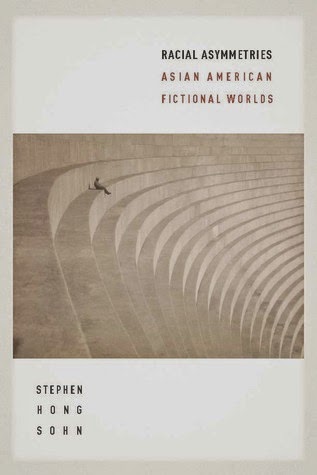
This slim volume, a gem, tells Shin's story of his boyhood and his experience in the Korean War as a sixteen-year-old ROK soldier. While many books written in English cover the action and politics of the war, especially from the American point of view, few tell in such a personal way about the individual Korean experience of this war on families, on refugees, on the young men in battle. Laced with important historical hindsight about the movement of the war, the narrative has the ring of truth of the young man who witnessed many aspects of this confusing war and reconstruction, and who managed to survive in order to continue his education. It is both informative and charming, as the narrator's voice is one of self-deprecation and gentle humor.
Tuesday, December 18, 2012
Forgotten Country by Catherine Chung
Catherine Chung's acclaimed debut novel (a Booklist Starred Review, among other terrific press) earns its accolades with elegant prose and a story of an immigrant family. Set in both America and in Korea, Janie's complicated relationship with her missing sister, Hannah, stands as a metaphor for Janie's own complicated relationship with her parents and with her identity. The story examines the loyalties in family love, how they originate and how they evolve and affect each family member. Much of what makes this book sing is Chung's gorgeous writing and sensitivity to the subtle, and the leaps from a tiny moment of emotion that expands its meaningfulness to the universal, regardless of one's country of origin. Tuesday, September 18, 2012
I Am the Clay, Chaim Potok
An old woman and an old man flee from their village outside of Seoul (south of the river Han) when the Chinese join the North Korean People’s Army and invade Seoul for the second time. In the early days of their journey they find a boy, bleeding with a shrapnel wound, in a ditch. Having lost a son in childbirth, she rescues him more than once from the brink of death, her prayers to the spirits constant, while the old man resists helping this stranger. They struggle to survive crossing the mountains and the wretched last winter of the Korean War. In the old man's opinion the boy has special powers that have brought them meat and relative health. While the old woman finds peace in the belief that this is a son sent to her.
This intense character study of two simple people whose lives are utterly altered by war is deeply felt and written with power and grace, without attempting to soften the gruesome brutality of war. It is also an excellent point of view on the Korean War from peasants’ lives.
Excerpt from Chapter 3, page 63:
Fearful, they stood at the mouth of the cave staring into a darkness that would not open itself to their eyes. The dank fungus smell of sun-starved stones and earth brushed against their faces and filled their nostrils.
Knopf, 1992
This intense character study of two simple people whose lives are utterly altered by war is deeply felt and written with power and grace, without attempting to soften the gruesome brutality of war. It is also an excellent point of view on the Korean War from peasants’ lives.
Excerpt from Chapter 3, page 63:
Fearful, they stood at the mouth of the cave staring into a darkness that would not open itself to their eyes. The dank fungus smell of sun-starved stones and earth brushed against their faces and filled their nostrils.
Knopf, 1992
Sunday, January 15, 2012
The Orphan Master's Son, Adam Johnson
Riding a crest of enormous praise, this debut novel by an American man about a North Korean citizen is a worthy achievement, and one I couldn't put down for two days straight. Despite twists of plot that in fiction often seem too coincidental, the reader's sympathy and alignment to the protagonist is so rich and deeply felt that these happenstances feel believable, and are forgivable. The book paints a harsh reality of life under Kim Jong Il, and though I think there is much basis for the events portrayed in this novel, it seems still to be a decidedly Western take on those difficult truths. The extremism of the ideology and the brutality of prison camp life and interrogation techniques are undeniable, and feel thoroughly researched. My question relates to the premise of the idea of a desire for freedom in the Western sense of freedom, a striving for an unknown entity that is at its core that sense of freedom for this people, who have a long history of oppression and suffering. The book is a page-turning thriller, with gravitas, and a heroic portrait of an exceptional man living under the pressure of exceptional times, undergoing gradual change that challenges his core identity and his pursuit of what it is to be human. Some of his characters, like the Captain and Mongyong, as well as minor incidental characters with mere walk-on roles, like the Japanese girl on the pier, will not soon be forgotten.
The telling of this story is structurally interesting, interwoven by DPRK Citizen’s broadcasts, and with shifting points of view to bring in several aspects to present a communal take on a story.
NY Times January 15 review
The telling of this story is structurally interesting, interwoven by DPRK Citizen’s broadcasts, and with shifting points of view to bring in several aspects to present a communal take on a story.
NY Times January 15 review
Monday, November 7, 2011
Miles from Nowhere, by Nami Mun
With stunning prose and a sensitive eye for detail, Mun unfolds five years from age 14 in the gritty and difficult life of a young Korean American runaway on the urban streets. Not only does Joon quickly lose her innocence and succumb to the seemingly soothing beguile of drugs, leading to heroin addiction, she must fight for a lost identity as she attempts to reconcile being the daughter of an abusive and abandoning father, and a neglectful and strangely behaving mother who only has eyes for the father. Though what Joon lives through and what she remembers is horrific and exactly as awful as one imagines such a hardscrabble life can be, Mun's unsentimental take on it and her stunning prose that reaches deep into the core questions of what makes us continue when so much is lost, when even the self is seemingly without redemption, is what makes this book a breathtaking reward.
Wednesday, November 2, 2011
My Innocent Uncle, by Ch'ae Man-sik
Ch'ae Man-shik (or Man-sik), who wrote stories and novels during the colonial period, is considered one of the greats of Korean modern literature. Like his other work, these three stories hone in on individuals who face the dilemmas of their times, those dilemmas of culture and historical circumstance which offer a tragi-comedy of errors. His renown rises from targeting the common man, not the upper class, and by using the common vernacular and dialect in satirical portrayals of life under the Japanese and shortly after liberation. "My Innocent Uncle" is told from the point of view of the uneducated nephew who works for a Japanese businessman. He thinks his intellectual uncle is the fool, having been arrested for socialist ideals, and his aunt even more of a fool, since she has cared for him despite the uncle's affair and lack of "real work." It's a biting commentary both on the intellectual idealists of the era, and on those who collaborate and believe the promises of the Japanese. Looking at the life of the student intellectual, "A Ready-Made Life" follows a young man who, educated by the Japanese like all his contemporaries, remains jobless, broke and aimless. "Once Upon a Paddy" feels Chekhovian in its portrayal of a hapless farmer who tries to take advantage of an opportunity to sell his land to a high-paying Japanese speculator, but ends up owning nothing, even after liberation, which he had counted on to have his property returned to him. The stories are remarkable in their intimacy with character, historical and political outlook and use of detail about the period.
Sunday, October 30, 2011
An Appointment with My Brother, by Yi Mun-Yol
The famed South Korean writer imagines meeting his North Korean brother after the death of his father--a defector to the North in the narrator's youth (a fact that parallels the author's life). The narrator, a professor of history who has suffered as a result of his father's defection, joins a tour group to Yenji, a chinese border town from which groups are allowed to see the famed Mt. Baektu and other North Korean sights. In this town, he meets his brother while at the same time encountering members of his group, who have their own agenda, political and economic. The narrative encompasses much discussion of unification along with many poignant episodes of cultural misunderstandings between the two brothers, who have an undeniable bond of brotherhood, despite years of resentment toward one another. Included in this story is an interesting explanation of the genealogical traditions of family namings, provided with a clarity and thoroughness I haven't seen before. Written in 1994, the novella is a snapshot of the politics of unification (prior to the Sunshine Policy) at that time.
Tuesday, October 18, 2011
Twofold Song, by Yi Mun-Yol
In a beautifully illustrated and bound bilingual edition, famed writer Yi Mun-yol's story of the last encounter of an affair presents as allegory of ancients and modern mixed together, with a coda that changes all that primordial prehistoric metaphor into something altogether different. The title of the story and its writing parallel each other with a constant shifting of sides and views, past and present, contrasts and similarities, profound with mundane. At times, the story has the flavor of Korean drama (melodrama) on its surface, but the thought and structure of this story are subtle, complex and interwoven without answer, much like how life is. Translated by Kwon Kyong-Mi, illustrated by Kwak Sun-young. Hollym, 2004.
Tuesday, September 13, 2011
The Martyred by Richard E. Kim
Richard E. Kim’s book THE MARTYRED, a 1965 National Book Award Finalist, became a Penguin Classic book in May 2011 (pictured left). The introduction is by Heinz Insu Fenkl, with a Foreword by Susan Choi. This Korean War story follows Captain Lee who investigates the murders and kidnappings by North Korean Communists of Christian ministers and priests. As Lee investigates the depths of this crime, he examines the meanings of faith and martyrdom in a narrative that is both a thriller and a fascinating exploration of these themes.
Sunday, August 21, 2011
KYOPO by Cindy Hwang (CYJO)
The Kyopo project by artist Cindy Hwang is a five-year photography and textual endeavor that explores and exposes the breadth and individual depth of people “of Korean ethnic descent and living outside of Korea,” from which the acronym derives. Several of CYJO’s KYOPO photographs are on exhibition as part of the Smithsonian National Portrait Gallery’s “Asian American Portraits of Encounter,” October 12–October 14, 2011. The photographs line the main hallway of the exhibition, while about eight side galleries feature other Asian American portraiture works, all of them equally stirring and evocative.
This massive book delves deeper than the exhibition can, presenting more than 200 individual photographic portraits, all in a similar pose, in the exact same setting with same lighting, and, most strikingly, of a similar scale. While these elements serve to give a surface uniformity to the book, what rises is the distinct individualism of the members of this grouping, both visually and with textual information. Photographs are displayed on the left while on the right are text blocks of their name, occupation, where they were born and where they live, and a few paragraphs of their response apparently to a question about KYOPO identity.
This is a stunning photographic and textual work, capturing five years in the cultural phenomenon of “Korean America.” An insightful foreword by Marie Myung-Ok Lee (author of Somebody’s Daughter), and an introduction by Julian Stallabrass further explore the impressions and content of this work.
This massive book delves deeper than the exhibition can, presenting more than 200 individual photographic portraits, all in a similar pose, in the exact same setting with same lighting, and, most strikingly, of a similar scale. While these elements serve to give a surface uniformity to the book, what rises is the distinct individualism of the members of this grouping, both visually and with textual information. Photographs are displayed on the left while on the right are text blocks of their name, occupation, where they were born and where they live, and a few paragraphs of their response apparently to a question about KYOPO identity.
This is a stunning photographic and textual work, capturing five years in the cultural phenomenon of “Korean America.” An insightful foreword by Marie Myung-Ok Lee (author of Somebody’s Daughter), and an introduction by Julian Stallabrass further explore the impressions and content of this work.
Monday, August 8, 2011
Night Sessions, by David Cho
This wonderful book of poems (CavanKerry Press, 2011) evoked tears, laughter, admiration and wonder. Cho captures with stunning delicacy a son’s love and longing for his father, the everyday, seemingly mundane yet forceful travails of being Korean American, and the complex relationships to a separate country of origin, while also expressing through this collection a coming-of-age story within a Korean American family that has experienced hardship and grief, all with exquisite language and sensitivity. I read most of these out loud, and their form only lends to their mellifluousness. As with the work of Monica Youn, whose creative word wizardy is often felt here, many of these poems left me breathless.
This Burns My Heart, by Samuel Park
This Burns My Heart captures you with a heroine who is both irresistible and flawed, and will engross with increasing twists in a triangle of love and sacrifice. The story explores how a fateful choice colors a decade of marriage, and challenges a young woman’s ambition already constrained by traditional Korean culture. Sam Park paints all the flavors of post-war Korea in this vivid debut, and his understanding and expression of the human heart is universal.
Sunday, June 5, 2011
Everything Asian, by Sung J. Woo
The name of the book is taken from the name of the store owned by the parents of the main character, Dae Joon (David). Father has been in America five years without his family setting up a business, and the book begins a month after the arrival of Mother, Dae Joon and his noona (older sister, In Sook--Sue). Struggling with language and assimilation, the reunion of the family, and the teenaged trauma that Sue expresses over having been wrenched from her life in Seoul at age 16, the story of this family is told with both humor and pathos. Point of view revolves with the chapters, touching on Father, Mother, and several other merchants in a rather tawdry kiosk-like mall. Except for one sexually graphic chapter of an American family with a grown son whose lives intersect for a moment with this Korean family, this novel could have easily been quite a successful YA book, as it’s a sensitive and authentic story of a young Korean boy’s coming-of-age struggle to find his place in the cloistered world of his family, and the beginnings of identity in a new country.
Wednesday, June 1, 2011
Through Our Eyes: Peace Corps in Korea 1966-1981, by William Harwood
This photograph book, while not a comprehensive collection of the early Peace Corps years in South Korea, includes numerous contributors, most notably Ambassador Kathleen Stephens’ (under President Obama) photographs from the late 1960s. Because it includes color images from the years of rebuilding when Peace Corps volunteers were both welcomed and regarded with superstition in the rural countryside, the book is an interesting testament to a slice of time in South Korea.
My Korean Deli, by Ben Ryder Howe
Ben, a self-proclaimed WASP, and Gab, his Korean American wife, live in the basement of her family’s house, Korean-style, as the young couple saves money to move into their own home. But for the mother's sake (a motivation and decision that felt somewhat glossed over)—ostensibly to give her work, the family pools their savings and buys a deli in Brooklyn. Ben is a senior editor at The Paris Review, and his days of dichotomy dealing with literature versus running a corner store provide the impetus for this memoir. The demands of his boss, the late George Plimpton, and the demands of a deli and a feisty mother-in-law spur Ben to consider and contrast his Puritan background and upbringing with the Korean immigrant culture of this family. Written with humor and contemporary wit, the story is filled with fascinating characters (store regulars, family members, and coworkers on both sides of the cultural divide), and reveals the interesting underside of merchandising a New York deli. Sometimes the material seemed like anecdotes more than story, but they add to a whole that explains one young man's journey of self discovery.
Light in the Far East: Archbishop Harold Henry's Forty-Two Years in Korea, by Edward Fischer
Catholic Archbishop Harold Henry founded the Columban Mission Socieety in Korea during the Japanese occupation until WWII, when he (like many Westerners) were deported from Korea. He served as a chaplain in Europe, and was decorated for bravery. He returned to Korea during the Korean War, and his legacy includes 46 churches, a seminary, 21 schools, four hospitals, six leper colonies and 400 small farms and a shipbuilding industry. During his tenure in Korea, the number of Catholics grew from 100,000 to 1 million. Fr. Henry's exceptional story and his life of devotion to the Korean people is carefully detailed in this biography, and the mores and traditions of the day provide the context for the choices he was given in this life.
There a Petal Silently Falls: Three Stories by Ch’oe Yun, translated by Bruce and Ju-Chan Fulton
[From the book jacket.] Elegantly crafted and quietly moving, Ch’oe Yun’s stories are among the most incisive portrayals of the psychological and spiritual reality of post-WWII Korea. Her fiction, which began to appear in the 1980s, represents a turn toward a more experimental, deconstructionist and postmodern Korean style of writing, and offers a new focus on the role of gender in the making of Korean history. Ch’oe is a Korean author known for her breathtaking versatility, subversion of authority, and bold exploration of the inner life. Readers celebrate her creative play with fantasy and admire her deep engagement with trauma, history, and the vagaries of remembrance.
Skirt Full of Black, Poems by Sun Yung Shin
Like the title of the debut collection of poems intimates, the book evokes a woman's perspective on the rich textures of language, tradition, culture, the manners of the diaspora, sensuality, myth, religion, birth, siblings and family, relational manners, identity, longing and belonging. It is a varied collection, stunning in the paradox of its economy of language against the meanings portrayed.
Yankee Hobo in the Orient, by John Patric
The egomaniacal libertarian John Patric self-published (and signed) a large number of additional printings of this book, originally pub'd by Doubleday in 1945. An adventurer and recluse, Patric traveled on pennies throughout Japan, China, and Japanese-occupied Korea in the 1930s. This loquacious text reports statistics of the area and times, and tells anecdotal incidents during his travels, both mundane and disturbing. It is a unique slice of the times as seen from one unique fellow, who later became somewhat of a character-recluse in Washington State. More about Patric and what became of him can be found on a blog by Erich Schlaikjer.
Nothing to Envy: Ordinary Lives in North Korea, by Barbara Demick
One of the few books on North Korea to break into the mainstream reading public, Demick followed 6 people for 15 years of daily living in the oppressive totalitarian culture, who eventually make the difficult choice to defect, despite knowing the repercussions those left behind will suffer. Part of what makes Demick’s book stand apart from many others that attempt to expose life behind the curtain, is her astute eye and superior level of experienced journalism that relate moments and situations with a Western sensibility. Generic photographs of street scenes throughout the book augment the harsh reality of these stories.
Subscribe to:
Posts (Atom)